Taste
Read entry
Cooking by taste
Your tongue is a better instrument than any teaspoon. How to taste with intent, and let each mouthful tell you what the dish needs next.
A quiet field guide to cooking from instinct: reading a dish with your senses, seasoning by feel, and building a decent meal out of whatever is already in the kitchen.
No measuring cups required. Five short essays on the small, unhurried habits that make a recipe optional.
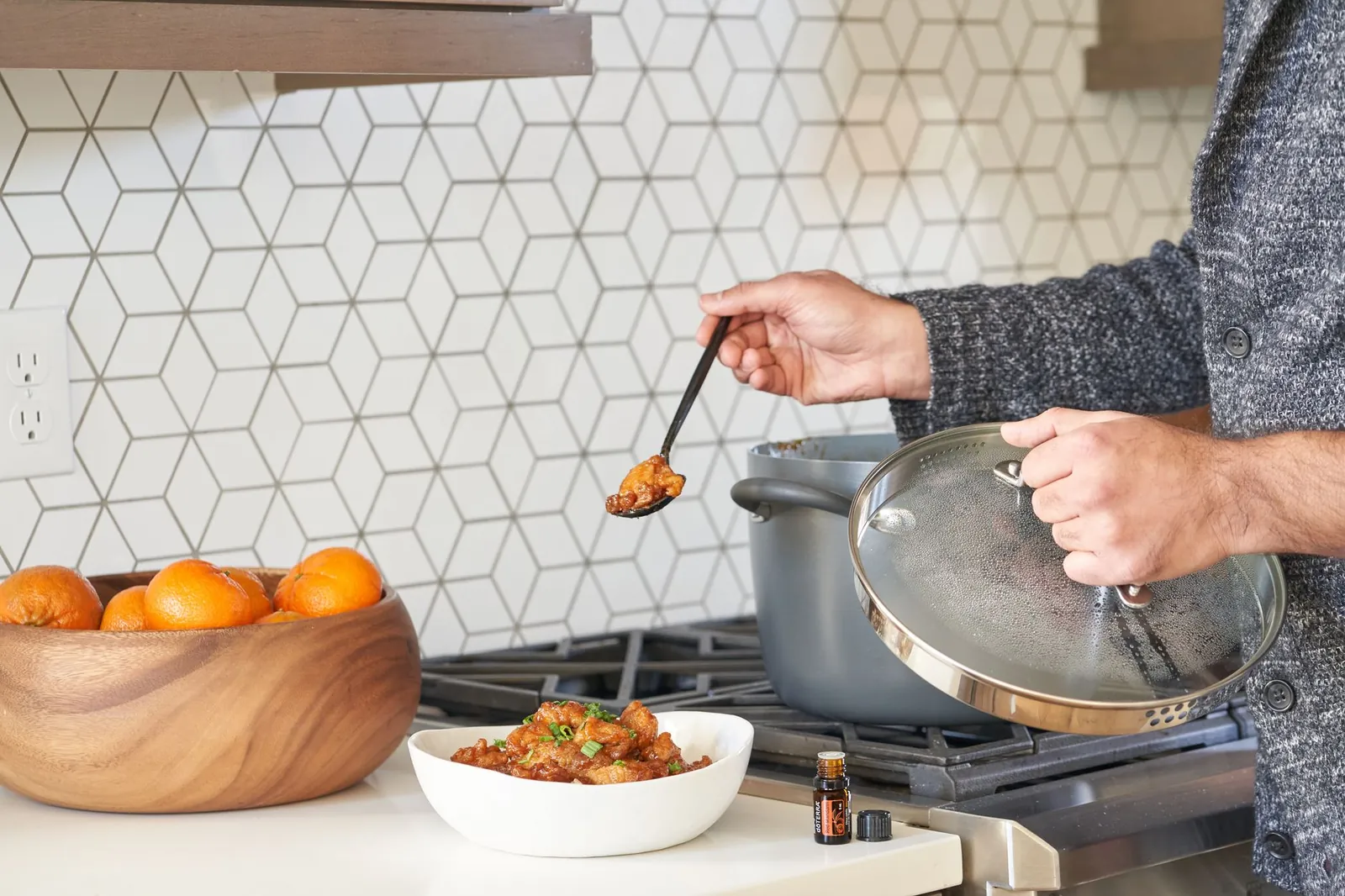
The Intuitive Cook is about the kind of cooking that happens when you put the recipe down. Not the reckless kind, and not the show-off kind, but the ordinary confidence of someone who tastes a sauce, thinks for a second, and reaches for the lemon. Most of us already do a little of this. The idea here is to do more of it, on purpose, until it stops feeling like guessing and starts feeling like listening.
Every entry stays close to the pan. How salt actually changes a bite. What your nose knows before your eyes do. How to look in a half-empty fridge and see dinner instead of a shopping list. There are no macros to hit, no promises about your health, and no gadgets you have to buy. Just attention, paid slowly, to food you were going to cook anyway.
Read them in any order. Each one stands alone, and each ends by pointing at the next thing worth trying.
Start with taste and the senses, then move on to building, adjusting, and knowing when to reach for a recipe after all.
Your tongue is a better instrument than any teaspoon. How to taste with intent, and let each mouthful tell you what the dish needs next.

Long before a timer goes off, a dish is telling you where it stands. How smell, sound, sight and touch read the pan for you.

An odd half-onion, a heel of cheese, a tired bunch of greens. How to see a meal in the leftovers instead of a trip to the shop.

Too salty, too flat, too thin, too sharp. A small toolkit of fixes for the moment a dish drifts off course mid-cook.

Intuition has limits, and baking is where it meets them. When a written recipe is the smarter, humbler choice.
Intuitive cooking is not magic. It is the same handful of senses, used on purpose instead of by accident.
Keep a clean spoon within reach and use it. A dish changes as it cooks, so a taste at the start rarely matches the truth at the end.
Onions turn sweet, garlic turns nutty, spices bloom. Your nose registers these turning points a beat before anything looks different.
A loud sizzle means dry heat and browning; a quiet, wet mutter means it is steaming. The sound tells you what the heat is really doing.
The give of a steak, the gloss of a sauce, the colour at the edges. A quick press or glance often beats a timer you set on a guess.
No, though a little experience helps you read the signals faster. The core habit is simple: taste, notice, adjust, taste again. Beginners can start on forgiving dishes like soups, stews and pasta sauces, where a wrong turn is easy to walk back with a squeeze of acid or another pinch of salt.
You taste, add a little, stir, wait, and taste again once it has dissolved and spread. Salt in small stages rather than one big pour, because you can always add more but you cannot easily take it out. Over time your hand learns roughly what a pinch does to a given pot.
Usually the opposite. Cooking by feel is what lets you use up the half-onion, the wilting herbs and the last of the cheese instead of buying to a fixed ingredient list. The fridge entry is entirely about turning odds and ends into a meal that actually hangs together.
Yes, and it is worth being honest about them. Baking, and anything that depends on precise ratios or chemistry, rewards measurement over instinct. The last entry looks at exactly when to set the intuition aside and trust the written method instead.